
From the Press Release:
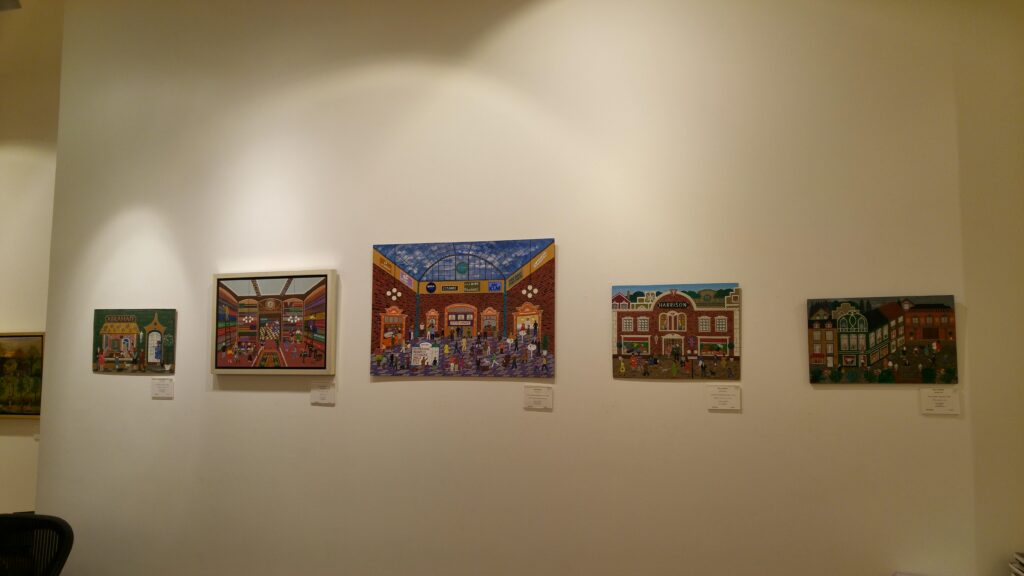
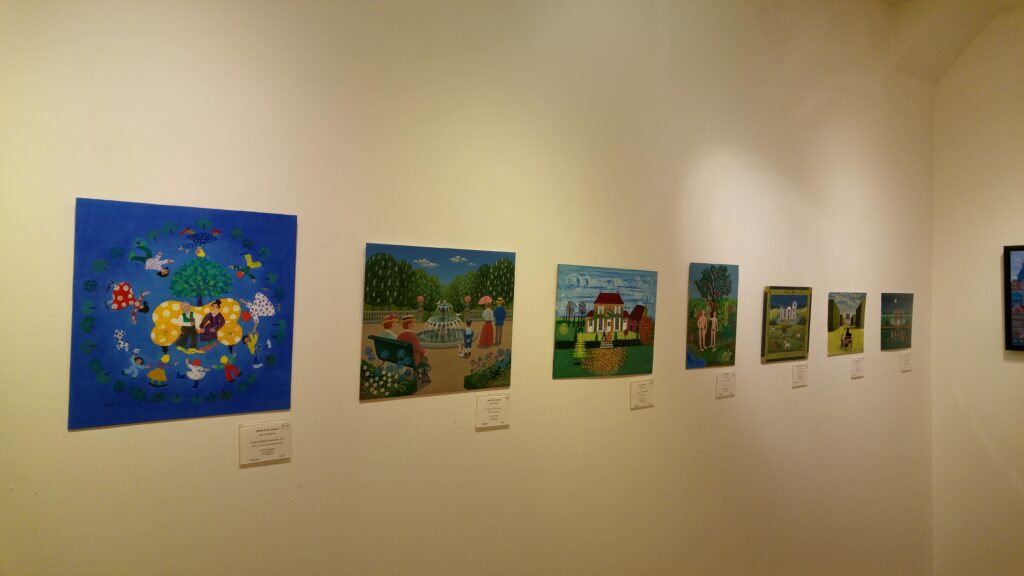
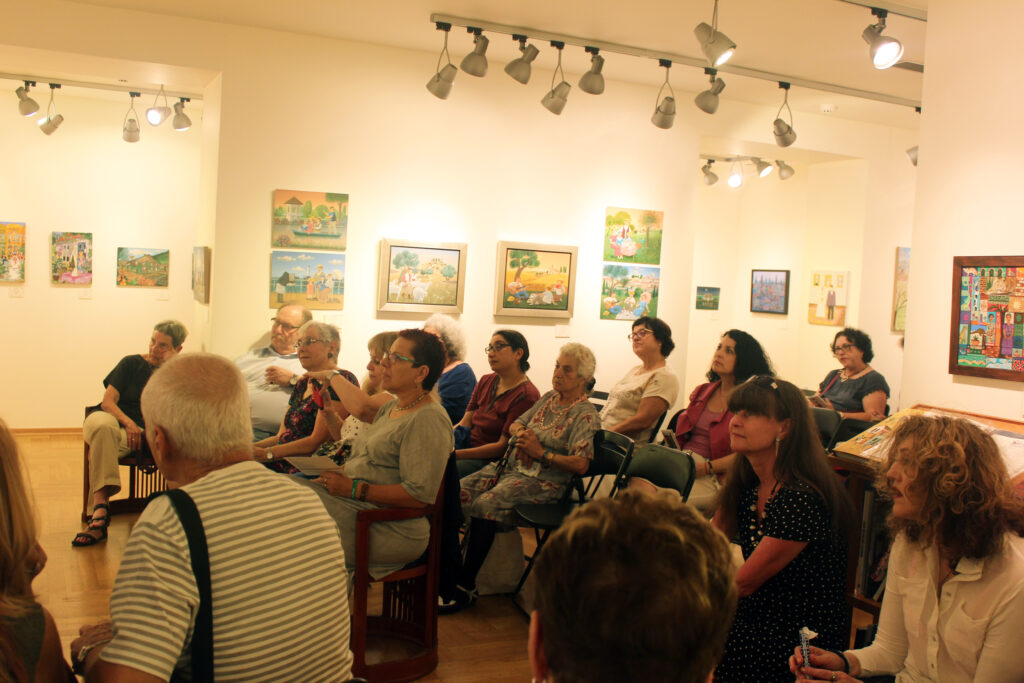
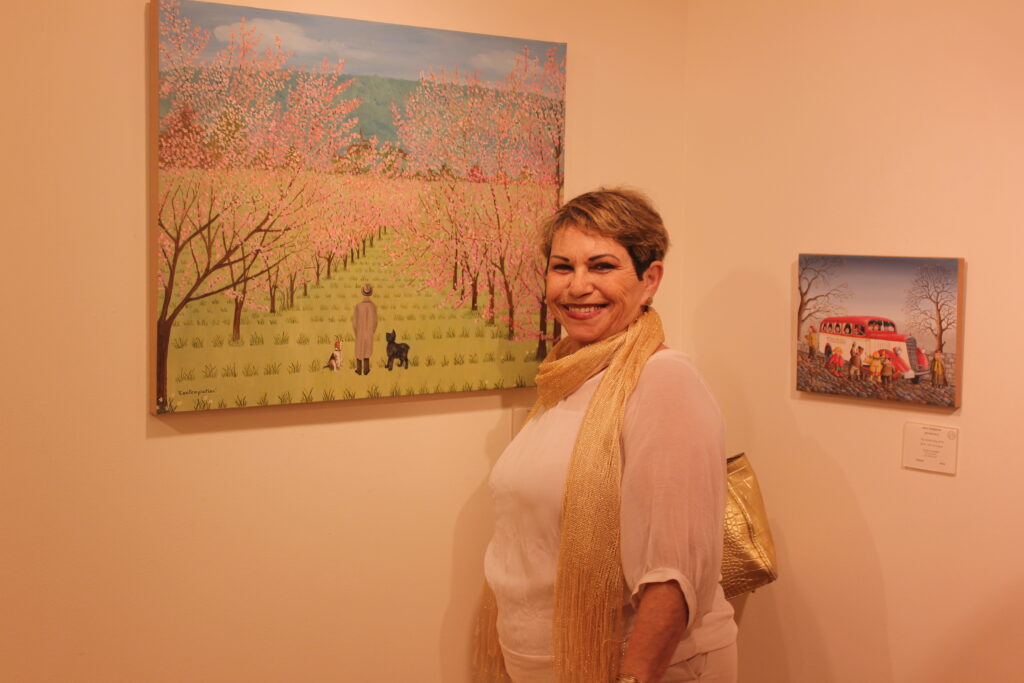
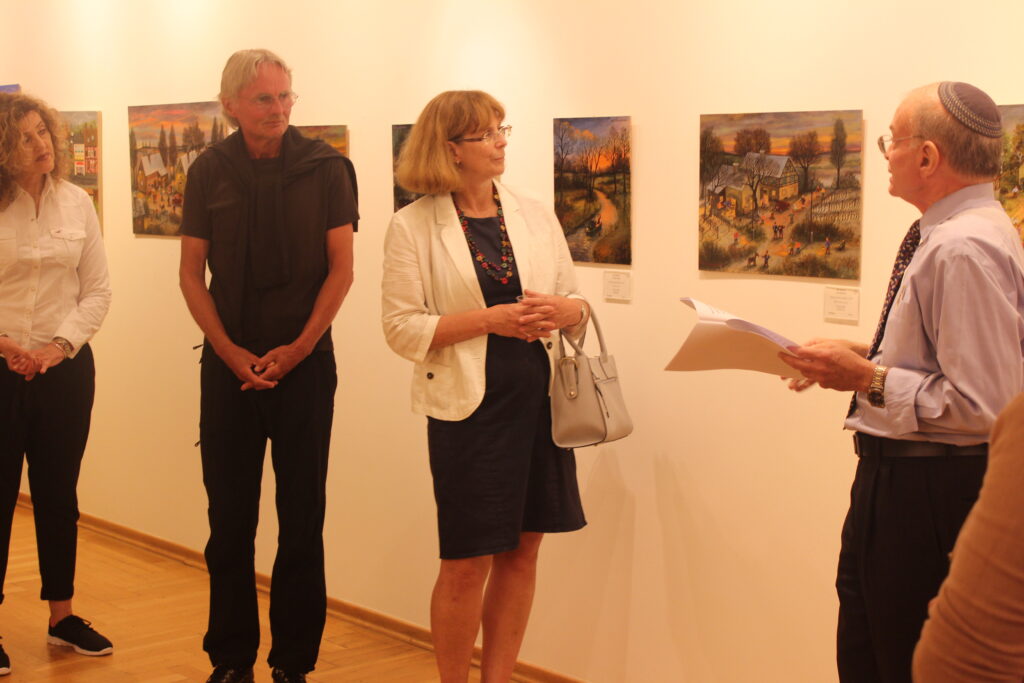
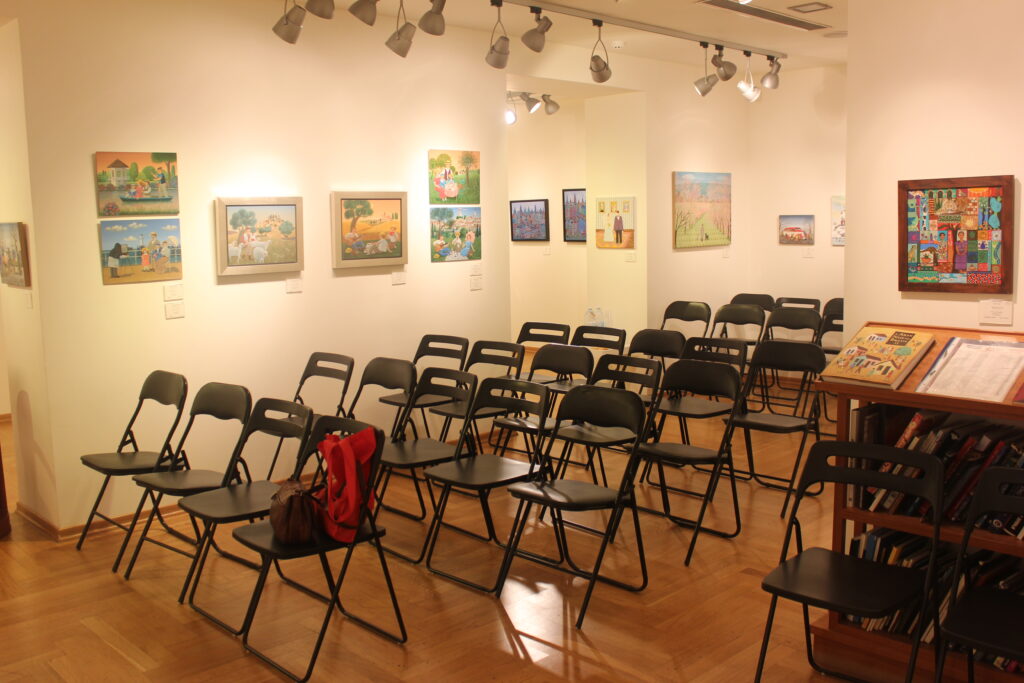
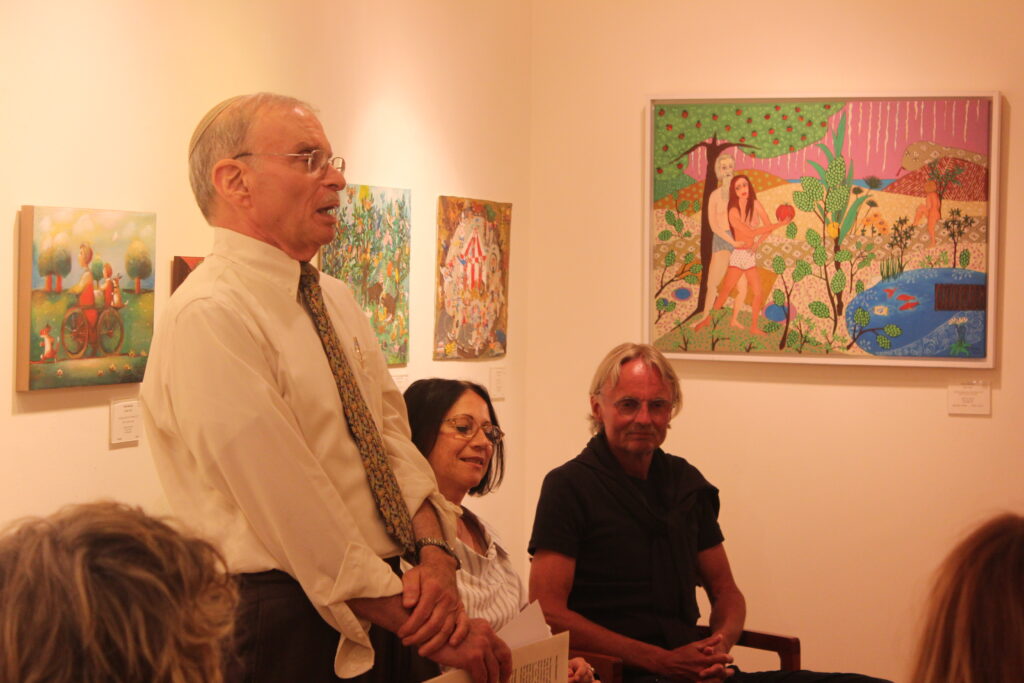
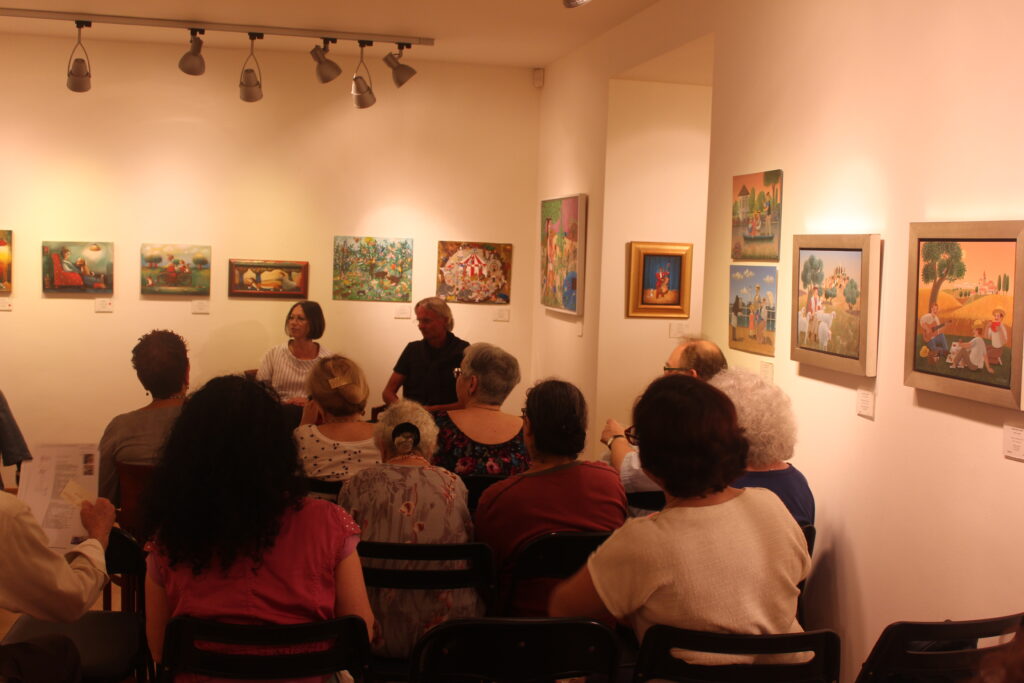
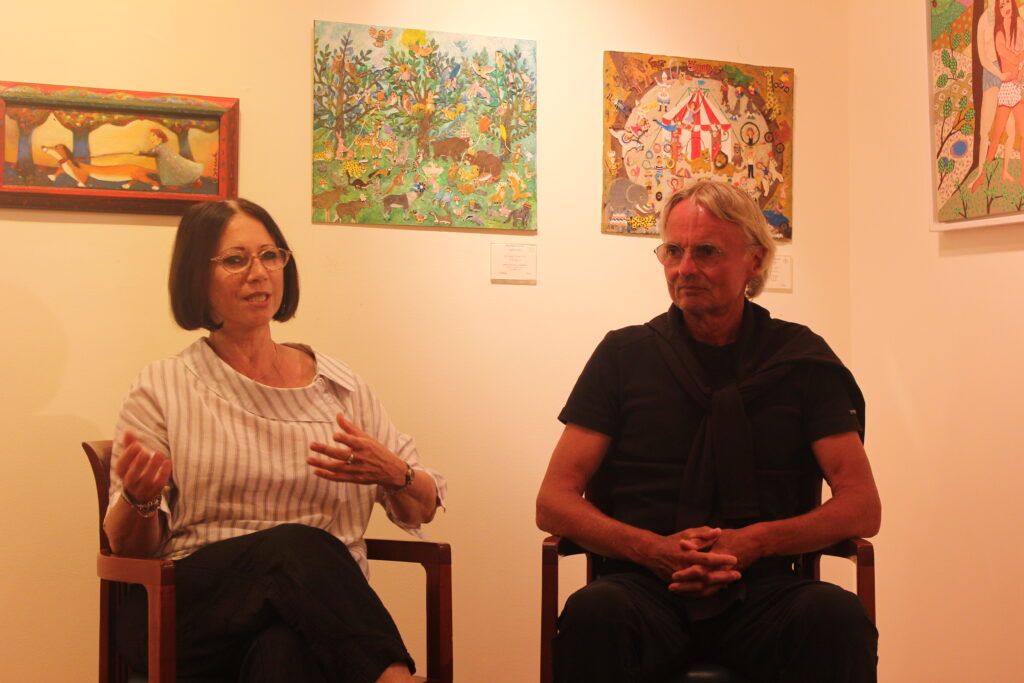
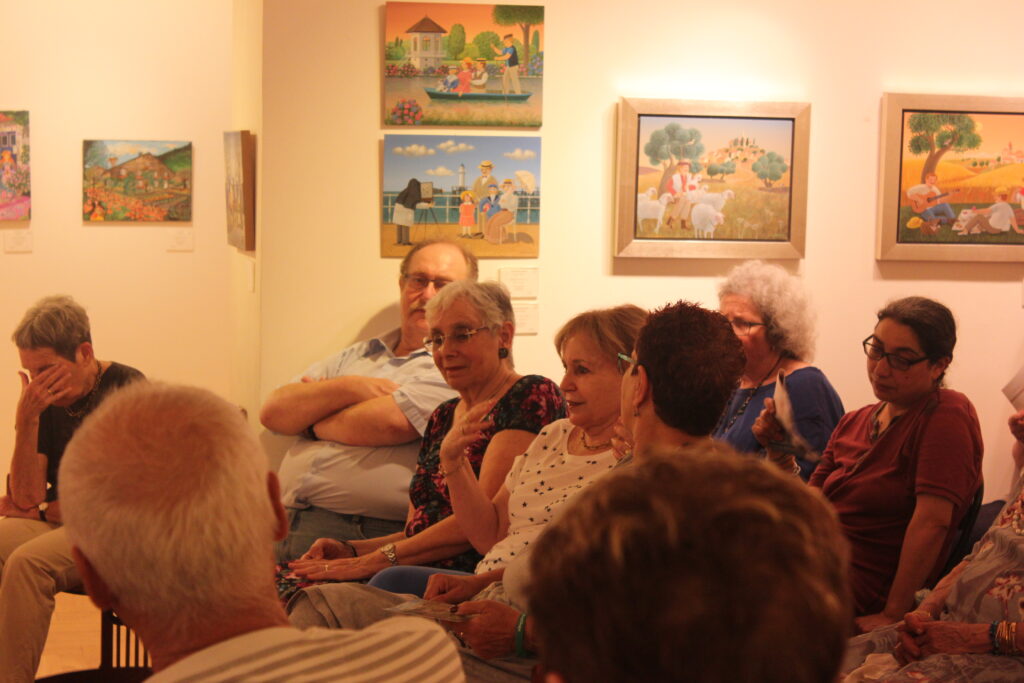
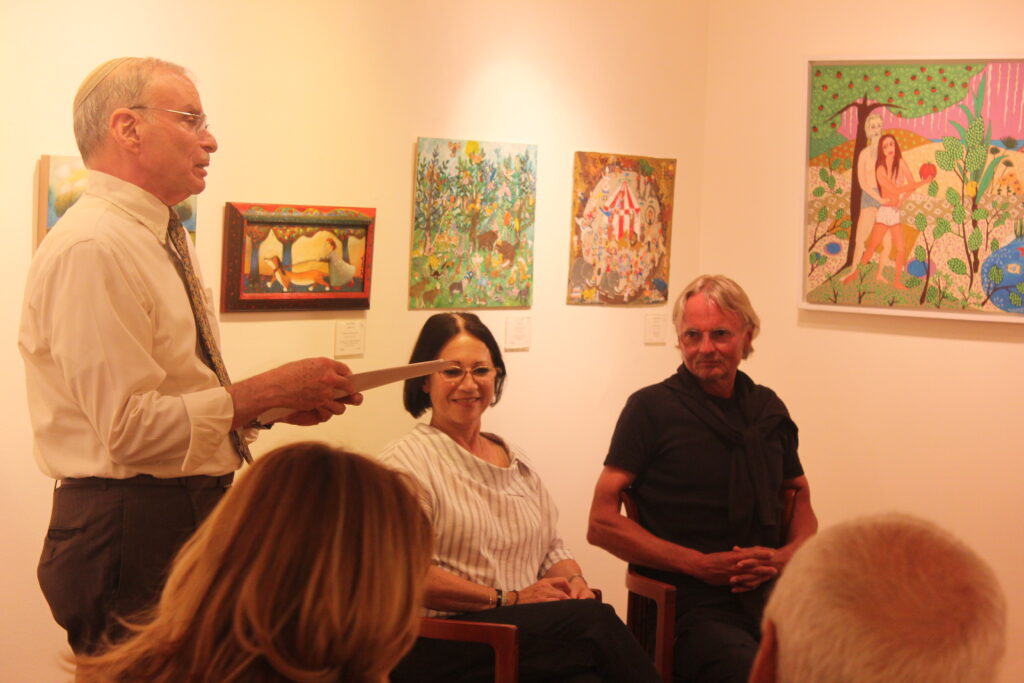
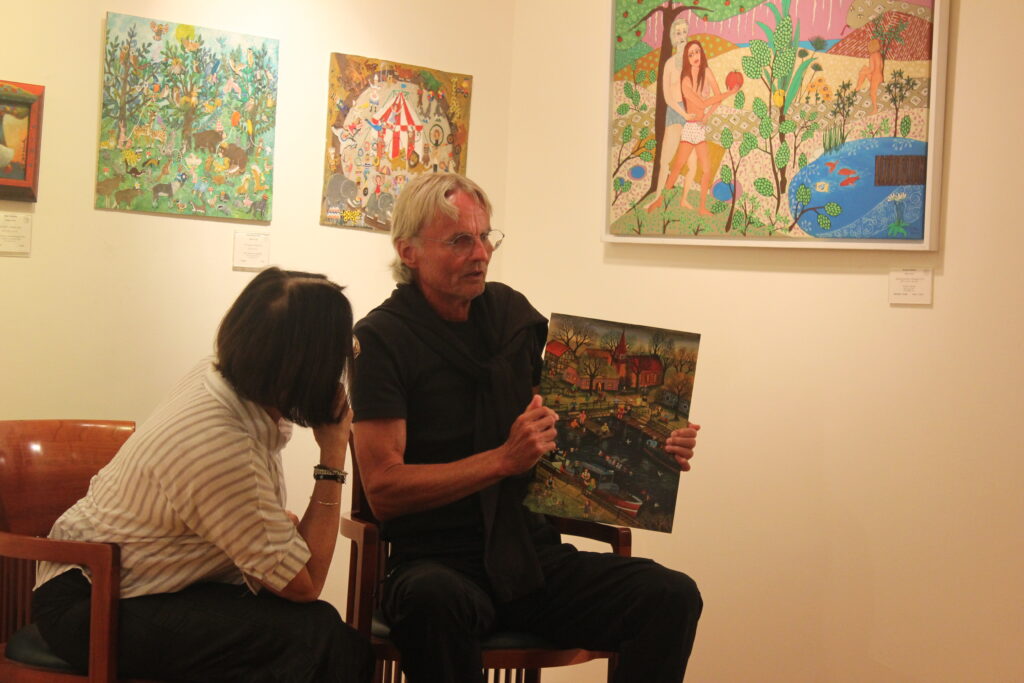
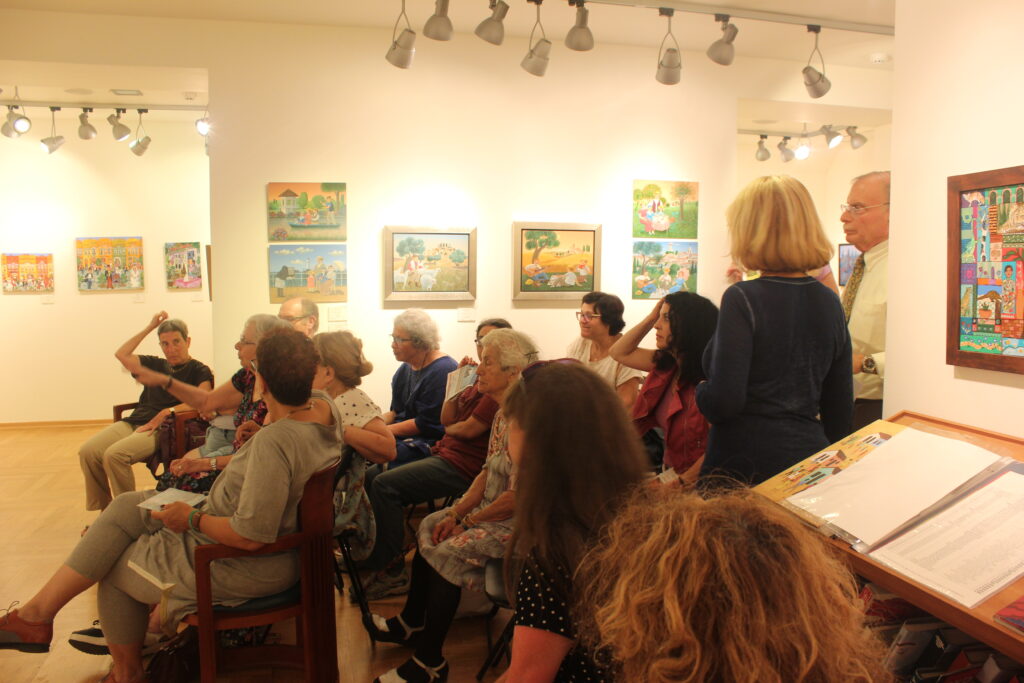
German naive art rose to prominence in the first quarter of the twentieth century, and highlighted daily life in town squares, shops and churches as well as rural farming and fishing communities. German naivism offers a poignant balance between the artists’ naïve innocence and intellectual awareness, with village life (often of the lower middle class) painted with painstaking precision and patience. The art of the German naives is shaped by the rhythmic rise and fall of the seasons and evidences the work of highly professional, self-taught artists of considerable skill, originality and imagination.
Olaf Ulbricht:
Olaf Ulbricht was born in 1951 and began to paint in the 1970’s. Although his paintings are characterized by a dark-hued palette, the artist successfully provides an inner light that emerges from his paintings. He focuses mainly on simple daily scenes: lake fishing, vineyard harvests, winter preparation, Sunday shopping and even an afternoon barbecue.
Dvora Gutman:
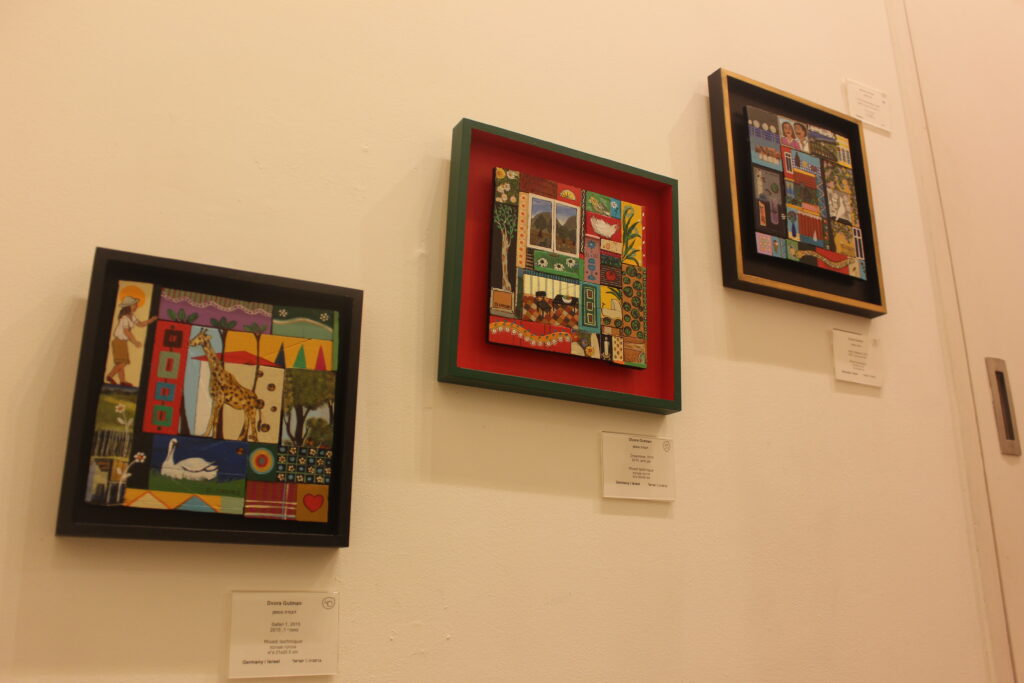
Dvora Gutman was born in 1957 in Berlin, and divides her time between Germany (where she operates a lovely gallery) and Israel. Recently she began using a unique technique, which combines different sized shapes of wood into one harmonic mosaic. These artworks reflect a composite of the different layers of the artist’s personality as well as of subjects close to her heart.
Henry Dieckmann:
Henry Dieckmann was born in Germany in 1933. At age 20, he visited Paris and was enchanted with its unique light and simplicity. Since he felt a strong connection to France, he decided to visit there every year and to concentrate his artworks on French scenes. His paintings are characterized by geometric-shaped subjects from familiar surroundings, alongside well-rounded figures. The subjects in his works focus on urban life: card games, sporting events, café culture, metro gatherings and street parties.
Dora Sedlick:
Dora Sedlick was born in Germany in 1925. During the period of time that she ran a small hotel, she began to paint alongside her husband, Heinz Sedlick. Her works reflect the changing seasons in the German countryside, which she fondly remembers from her childhood. Alongside scenes of auburn autumn leaves, we observe summers in her village, in which the affinity between people, barn animals and nature is vividly felt.
Heinz Sedlick:
Heinz Sedlick was born in Germany in 1932. Together with his wife, he ran a hotel, and in parallel, starting in 1970, began to paint. He emphasizes through his paintings a longing for the olden days in urban settings: railroad stations, shops, cultural centers, libraries, theatre squares and well-dressed individuals.
Bruno Epple:
Bruno Epple was born in 1931 and started painting in 1955. His artworks often focus on one main figure and that figure’s special activity: fishing, harvesting, reading, flying kites and more. Through the contrast between gloomy weather and colorful big-eyed characters, he succeeds in reflecting emotions of calmness, simplicity, happiness and love.